Saturday, January 26, 2008
The Common Algae Problem
I have recently been posting on fish tank forums, and I have found that algae is a very common problem. Although it may seem devastating, its an easy fix. First, check to see if your tank is in direct sunlight. Direct sunlight will encourage algae growth. Also, overfeeding your fish can lead to algae growth. Excess food decomposes into phosphate and ammonia, both of which are algae fertilizers. Make sure you keep up on your water changes to remove ammonia and phospate. Remember, 20 % of the water every two weeks.


Wednesday, January 23, 2008
The Freshwater Nitrogen Cycle
This cycle is important for any aquarium owner to understand. The nitrogen cycle, if not completed, is what causes new tank syndrome, and new tank failures. The cycle begins with a new tank, with new water, without any fish. When the first fish is added, ammonia from its waste immediatly poison the water. Too much ammonia will kill your fish. However, the fish help certain bacteria to grow that will turn the ammonia into safe by products. The nitrogen cycle has three steps:
1. The Initial Step: This step occurs when fish are first introduced. Their waste and uneaten food is broken down into non toxic ionized ammonia (NH4) and toxic unionized ammonia (NH3). The non toxic NH4 is present when the pH of the water is below 7, but when the pH is above 7, toxic NH3 is present. Ammonia levels rise within the first three days. Any amount of NH3 is dangerous, but when it reaches about 2 ppm, your fish are at risk.
2. The Second Step: Nitrosomonas bacteria oxidize the ammonia, thus eliminating it and creating nitrites in the process, also toxic to fish. I mg/L of nitrites is lethal. The nitrites will appear around the end of the first week after adding fish.
3. The Third Step: Nitrobacter bacteria convert the nitrites into nitrates, which are non toxic in small doses. These nitrates should be monitered every month or so for the rest of you aquarium experience. At high levels, nitrates are lethal. However, they will always be present. Routine water changes will prevent these nitrate spikes.
The entire process should take around 2 to 3 weeks. When cycling, test water routinely to see how far along your tank has come.
In addition to previous knowledge, http://freshaquarium.about.com/cs/biologicalcycle/a/nitrogencycle.htm, was used to obtain information about the nitrogen cylce.
1. The Initial Step: This step occurs when fish are first introduced. Their waste and uneaten food is broken down into non toxic ionized ammonia (NH4) and toxic unionized ammonia (NH3). The non toxic NH4 is present when the pH of the water is below 7, but when the pH is above 7, toxic NH3 is present. Ammonia levels rise within the first three days. Any amount of NH3 is dangerous, but when it reaches about 2 ppm, your fish are at risk.
2. The Second Step: Nitrosomonas bacteria oxidize the ammonia, thus eliminating it and creating nitrites in the process, also toxic to fish. I mg/L of nitrites is lethal. The nitrites will appear around the end of the first week after adding fish.
3. The Third Step: Nitrobacter bacteria convert the nitrites into nitrates, which are non toxic in small doses. These nitrates should be monitered every month or so for the rest of you aquarium experience. At high levels, nitrates are lethal. However, they will always be present. Routine water changes will prevent these nitrate spikes.
The entire process should take around 2 to 3 weeks. When cycling, test water routinely to see how far along your tank has come.
In addition to previous knowledge, http://freshaquarium.about.com/cs/biologicalcycle/a/nitrogencycle.htm, was used to obtain information about the nitrogen cylce.
Adding New Fish
The most exciting part of aquarium keeping is purchasing a new fish. However, this is where a lot of people go wrong as well. If you have a new tank, be patient with adding fish. It is hard to wait, but it is well worth it. Buying fish too early is a waste of money, as most will die. Make sure that your water cycle is completed first. Always get your water tested before purchasing your first fish. Start small! Buy something cheap and hardy. Only add one species at a time. Start with a couple tetras, and add a corydora or small pleco a week or so after. Then add a fish every two weeks or so. If you add to fast, you will risk a disease outbreak, and you will lose all your fish. When adding fish, always remember the basics. Let the bag float for a while to acclimate the fish. Ten to fifteen minutes should do. Keep out a special eye for new fish, and make sure that they are eating and getting along well with the other tankmates. If you are careful, you shouldn't have to deal with many dead fish. Always listen when the guy at the fish store says you shouldn't buy that fish now.
Friday, January 18, 2008
The Best Fish Store Ever
Strictly Fish in Lakewood California is the best fish store I have ever seen, and many others would agree. The fish selection is amazing, and the aquariums are all clean. They have a constant supply of quality African Cichlids, koi, and many of the other favorites. They also sell salt water fish, and are known for their saltwater selection. They have huge sales about every month or so, and will mail you a postcard as a reminder if you like. The dry goods selection is better then most fish stores, and they always have a good supply of aquariums to buy. The staff is extremely nice, and every employee knows everything you need to know about fish. They will even order a special fish for you if you can not seem to find it. Check out their new website for more information.
http://www.strictlyfishlakewood.com/
Or call at 562-421-9106
http://www.strictlyfishlakewood.com/
Or call at 562-421-9106
Tuesday, January 15, 2008
Fish of the Day
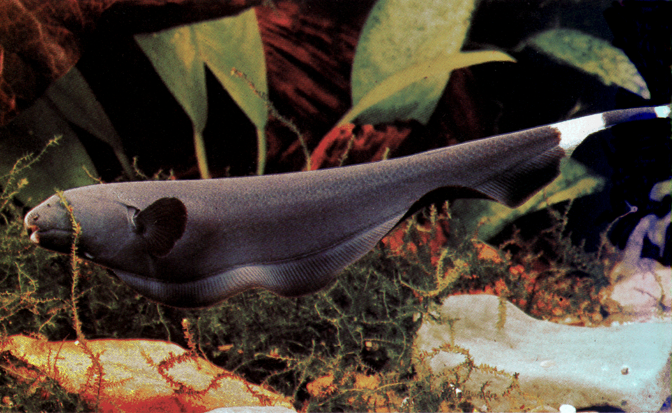 The black ghost is a very fun and interesting fish. They are uniquely shaped and have a personality unlike any other fish. These fish are near blind, and use weak electric pulses to navigate around the tank. They are nocturnal, and hide most of the day. However, they come out right after the lights are turned off, or when food is dropped in the water. They swim in odd patterns, both forwards and backwards. Sometimes they appear rather clumsy, missing their intended hiding places as they swim backwards into the glass. These fish are one of the most entertaining species you will find.
The black ghost will grow up to 8 inches in captivity, but can grow to 12 in the wild. They require warm water (80-82 degrees), thats slightly acidic. However, they can adapt well to different conditions. The cleanliness of the water is the most important part. These fish need clean water. In terms of space, a 20 gallon tank is sufficient, but the bigger the better. They require hiding places; pipes, caves, or dense plants work well. A fun trick I have learned is to use a clear glass vase or cup for them to hide in. Because they are blind, they figure that they are hidden while in the cup. This allows you to view your fish at any time. It can be tricky to get them to use their glass as a cave, but once they claim that as their home, they will return to it every day. It is quite a sight to see a fish hovering in a cup in the tank. For feeding, frozen and live foods are the best. Frozen bloodworms are the most convenient, but make sure that some of the food gets to your ghost fish before everyone else eats it. The black ghost fish are rather slow when finding food. They do well in non aggressive to semi aggressive communities, with fish about their size.
I strongly recommend this fish for all fish keepers.
Wednesday, January 9, 2008
Community for the Kids
My cousins introduced me to a fun and easy community option for one of my tanks. It all started when they one a guppy, a male, at a fair. They went out and purchased one more guppy, a female. Without knowing what they had done, they suddenly had about 20 guppies in their tank! I explained that guppies are livebearers, which means that they have live birth. This makes it easy for them to breed. I decided to start a new tank with a group of about 8 guppies, 6 female and 2 male that i took from my cousins. I put a small pleco, a small corydora catfish, and some bushy floating plants in the tank as well. A few weeks later I had my first set of babies!
Many people do this officially, trying to breed the best guppy. However, I enjoy doing it for fun. It is exciting to see what new color combos your guppies create. Plus, it is easy to raise them. Just feed the babies about 4 times a day. Feed them finely ground fish flakes, at the minimum. The more variety of food, the faster they will grow. Bloodworms and brine shrimp (frozen or live) are both good choices. Another good choice is the yolk of a hard boiled egg. Just take a small chunk and mix it in a little water, creating a yellow paste. When you pour it in the tank it will create a yellow cloud, which the guppies will love.
This community idea is great for the kids. They will have fun watching the babies, and seeing the generations of guppies progress. Just make sure that u start with more females then males, the females will be less stressed that way.
Many people do this officially, trying to breed the best guppy. However, I enjoy doing it for fun. It is exciting to see what new color combos your guppies create. Plus, it is easy to raise them. Just feed the babies about 4 times a day. Feed them finely ground fish flakes, at the minimum. The more variety of food, the faster they will grow. Bloodworms and brine shrimp (frozen or live) are both good choices. Another good choice is the yolk of a hard boiled egg. Just take a small chunk and mix it in a little water, creating a yellow paste. When you pour it in the tank it will create a yellow cloud, which the guppies will love.
This community idea is great for the kids. They will have fun watching the babies, and seeing the generations of guppies progress. Just make sure that u start with more females then males, the females will be less stressed that way.
Fish of the Day

This is the elephant nose. Its name is given for its long nose. However, when observed closer, the long nose is actually a long chin. The mouth is above it. These guys will fight amongst themselves, so only keep one, unless you have plenty of space for them to each have their own territory. They can grow up to 13 inches. The one i had stayed at about 6 and a half inches. They are omnivorous, and prefer live food. However, frozen blood worms will be devoured. Elephant nose require a good hiding place because they are nocturnal. One cool fact about the elephant nose is that it emits electric pulses to navigate and defend itself. These pulses can degrade the water quality, so this fish is not for beginners. Although they sound dangeroust, elephant nose can live in communities with other semi-aggressive to aggressive fish.
Friday, January 4, 2008
Growing Giants
A large plecostomus is the key to a clean tank. However, most people don't like spending 20+ dollars on a sucker fish. I have some secrets about growing a plecostomus big, in limited time:
- Start with a five dollar fish. Should be an inch, maybe two
- Purchase the large algae tablets, and put one in the tank. If the other fish eat the algae tablet first, this may not work.
- Keep an eye on the tablet, it may take a small pleco a few days to finish it. Replace the tablet the day that the fish finishes it
- The pleco should get to the point of eating one a day.
- Once the pleco reaches about 6 inches, start feeding it two tablets a day.
- An 8 inch pleco is perfect for any size tank 20 gallons or more.
The process should work pretty quick, within a few months. I'm three for three on my last plecos. Each grew to 6+ inches in months, and lived 2+ years.
Fish of the Day

The fish of the day is the plecostomus, aka the "sucker fish". These are essential for a successful aquarium. They are stable, efficient, and easy to grow. They can grow up to about three feet long, but don't worry, thats only in the wild. If fed right, they can reach about a foot in an aquarium. I always keep a good-sized pleco in my tanks, and i never have algae problems. These fish are nocturnal, so your algae will disappear over night. These fish will jump, so make sure you keep your lid shut. In the wild, they breed in the mud, so if it does jump, it will live longer than most fish. They also come in a large variety, here's some cool ones:
 Albino Golden Bushy Nose Plecostomus
Vampire Plecostomus / Galaxy Plecostomus

Zebra Plecostomus
All of these special Plecos are hard to find, and usually rather expensive. I'll share some of my secrets on growing a large pleco fast in my next post.
Thursday, January 3, 2008
Cleaning
This is where people mess up. Cleaning should not take more then twenty minutes. The tank does not need to be spotless, in fact, if it is spotless your fish will die. This is all you need to do, every 2 or 3 weeks:
- Remove 20 percent of the water from the tank. Syphoning is the easiest way. Syphon the water from the bottom, that way you can remove waste at the same time. I like to stir up the substrate a little first, then syphon. That way, all the waste is up and about, ready to be removed.
- Have treated water ready on the side. Refill the 20 percent of the tank you removed.
- Check filter pad, replace if necessary.
- If any decor needs cleaning, take it out and scrub it in warm water without any soap or cleaning chemicals.
And that is it. If you clean too much, then you will remove too much essential bacteria, and your fish will die. If you use my method, and stir the substrate, your tank may look its dirtiest after you've cleaned it. That's ok. Let your filter do its job.
Subscribe to:
Comments (Atom)
